Content marketing is one of the most powerful ways to build trust, attract customers, and grow your brand. But let’s be honest—most businesses don’t have a real strategy. They post a blog here, a video there, maybe a few social media updates, and hope something sticks.
The result? Inconsistent messaging, low engagement, and wasted effort.
What separates successful brands from the rest is not just “creating more content,” but building content around a solid foundation. That foundation is called content pillars.
In this article, we’ll break down:
What content pillars are.
Why they are essential for winning marketing strategies.
How to create them step by step.
Real-world examples to inspire your strategy.
Mistakes to avoid.
By the end, you’ll see why content pillars aren’t just a “nice-to-have”—they’re the backbone of sustainable growth.
What Exactly Are Content Pillars? (The Foundation of Strategy)
Think of your content marketing like building a house. Without strong pillars, the structure collapses.
Content pillars are the main themes or categories that guide all your content creation. They represent both your brand’s expertise and your audience’s core interests.
Instead of chasing random ideas, you consistently create content that fits under these pillars, ensuring everything ties back to your business goals.
Examples of Content Pillars
Fitness Brand → Nutrition, Training Programs, Mental Wellness.
Travel Company → Destinations, Travel Tips, Cultural Insights.
Tech Agency → Web Development, Digital Marketing, Website Maintenance, Business Automation.
Why the Term “Pillars”?
Because they hold everything together. Blogs, videos, social posts, newsletters—all connect back to one of these main themes. This keeps your content library structured and scalable.
Why Content Pillars Are Crucial for Marketing Success
Here’s where it gets real. Content pillars aren’t just about “being organized.” They directly impact visibility, authority, and conversions.
1. Consistency & Clarity
Consistency is the #1 struggle for most businesses. Content pillars provide clarity: every time you brainstorm an idea, you check—does this fit under a pillar? If yes, it aligns with your strategy. If not, discard it.
👉 Example: Imagine a technology company suddenly publishing content about “Healthy Recipes.” Even if it’s valuable, it doesn’t fit. Sticking to pillars ensures every piece reinforces the brand identity.
2. Authority Building
People trust experts. When you publish high-value, pillar-based content over time, you dominate your space.
👉 Example: HubSpot built global authority because its content consistently revolves around three main pillars—Inbound Marketing, Sales, and CRM.
3. SEO Advantage (The Technical Edge)
Search engines reward structured content. Google uses topic clusters—where a main “pillar page” links to supporting content.
For example:
Pillar Page: Complete Guide to Website Maintenance
Supporting Posts: How to Speed Up Your Website, Top 5 Security Plugins, How Often Should You Backup Your Site?
Together, they boost rankings because Google sees you covering the topic comprehensively.
💡 According to HubSpot, businesses using a pillar-cluster strategy saw higher SERP rankings and more organic traffic than those relying on isolated blogs.
4. Audience Trust & Loyalty
Your audience wants to know: “Can I rely on you for consistent value in the areas I care about?”
Content pillars help build that trust. Instead of confusing people with scattered topics, you show up with clarity and focus. Over time, people come to you first for solutions.
👉 Think about your favorite YouTube channel or podcast. Chances are, they stick to a few themes. That’s why you trust them. Your brand should work the same way.
5. Content Efficiency & Repurposing
Here’s the secret: a single pillar can fuel content for months.
Example:
Pillar: Business Automation
Long-form Guide: The Ultimate Guide to CRM Integration
Repurposed into:
LinkedIn carousel: 5 Signs You Need a CRM
Short video: CRM Explained in 60 Seconds
Email: How Automation Saves You 10 Hours a Week
Blog: Top 3 CRM Platforms for SMEs in Kenya
That’s one idea → multiple assets → different channels → maximum ROI.
How to Create Effective Content Pillars
Here’s a step-by-step framework any business can apply:
Step 1: Know Your Audience
Everything starts with them. What are their pain points, goals, and burning questions? Use:
Customer surveys.
Keyword research.
Competitor analysis.
Tools like AnswerThePublic or Google Trends.
👉 Example: For a healthcare brand, common pain points might include patient management, appointment scheduling, and billing. That tells you the pillars should align with healthcare CRM, appointment systems, and financial workflows.
Step 2: Define Your Brand Goals
What do you want to achieve? More leads? Higher SEO rankings? Selling a service? Your goals shape your pillars.
Step 3: Choose 3–5 Core Pillars
Too many and you’ll lose focus. Too few and you’ll miss opportunities. Three to five is the sweet spot.
If you’re an eCommerce store → Products, Customer Lifestyle, Industry Trends.
If you’re a consultant → Core Expertise, Case Studies, Personal Branding.
Step 4: Map Supporting Content
Each pillar should have clusters of related content.
👉 Example: Pillar: Website Maintenance
Blog: How to Speed Up Your Site in 2025.
Video: 3 Common Security Mistakes That Kill Websites.
Case Study: Reducing a Client’s Downtime by 80%.
Checklist: Website Maintenance Monthly Routine.
This creates a rich ecosystem instead of isolated pieces.
Step 5: Repurpose & Distribute
Your content should work harder than you do. Publish once, distribute everywhere:
Long-form blog → Email newsletter.
Blog sections → LinkedIn & Twitter threads.
Infographics → Instagram carousels.
Videos → TikTok, Reels, Shorts.
Common Mistakes to Avoid
Even with the best intentions, many brands mess up content pillars. Watch out for:
Too Many Pillars – dilutes authority. Stick to 3–5.
Chasing Irrelevant Trends – Not everything viral serves your goals.
Irrelevant Topics – If it doesn’t align with your brand or audience, skip it.
Ignoring Analytics – Content pillars should evolve with audience behavior.
Real-World Example: Content Pillars in Action
Let’s take a healthcare clinic.
Pillars:
Weight Management
Chronic Illness
Women’s Health
They publish:
Blogs answering common patient questions.
Videos explaining treatments.
Patient testimonials on social media.
A monthly newsletter with lifestyle tips.
Over 6 months, they see:
+40% organic search traffic.
Higher patient inquiries.
Stronger trust as a specialist clinic.
This same framework works whether you’re a tech startup, retail store, or professional service provider.
Advanced Strategy: Combining Content Pillars with Funnels
Here’s where most businesses stop—they create content but don’t link it to conversions.
Search engines once served pages of “ten blue links,” inviting users to click through to websites. Now they frequently show AI‑generated overviews that summarize answers right at the top of the results. Google calls this feature AI Overviews (AIOs), and they are spreading quickly. According to a 2025 analysis by marketing platform WordStream, AI Overviews appear in around 55 % of Google searches wordstream.com. The summaries occupy a large portion of the screen (around 42 % on desktop and 48 % on mobile)wordstream.com, pushing organic results further down. Users increasingly get the information they need without leaving Google. Studies cited by Get The Clicks found that overall click‑through rates (CTR) on Google have dropped by about 30 % year‑over‑year, even though impressions have risen (gettheclicks.com). Put simply, organic search traffic is shrinking while AI answers expand.
This shift has alarmed publishers, marketers and businesses. An article on 39 Celsius Web Marketing reports that websites are seeing organic click declines of 15 % to 70 % or more (39celsius.com), depending on industry and query type. In the worst cases, pages that used to enjoy strong search rankings now receive fewer than half the clicks they once did. Another study from Seer Interactive monitoring over 7 800 queries found that organic CTR declined by ~70 % when an AI Overview was present on the SERP. Even paid search is affected: the same study reported that paid ad CTR dropped from 21.2 % to 9.87 % when an AI overview appeared. Businesses that rely on search traffic can no longer assume that ranking first will drive visits—being cited in the AI answer is the new objective.
Against this backdrop, technical SEO—the set of practices that ensures search engines can crawl, interpret and trust your content—has become the critical bridge to AI visibility. This article explains why technical SEO is essential for AI‑generated overviews, presents evidence for how AI Overviews are transforming click‑through patterns, and offers an actionable blueprint for businesses to adapt.
The impact of AI Overviews on clicks and traffic
Click‑through rates are plummeting
As AI summaries take over the top of results pages, CTR falls for traditional organic listings. An Ahrefs study comparing 300 000 keywords showed that search results with an AI Overview had a 34.5 % lower average CTR for the top‑ranking page. WordStream’s analysis notes that CTR for top‑ranking sites dropped by about 7 % when an AI Overview was present. More dramatically, Seer Interactive observed a ~70 % decline in organic CTR. These figures illustrate that the presence of AI summaries systematically reduces the likelihood of users clicking through to external pages.
Zero‑click searches are becoming the norm
One of the main reasons CTR drops is the rise of zero‑click searches. WordStream reports that 58 % of Google searches now result in no click at all—users read the AI summary or featured snippet and move on. Pew Research (as summarized byGet The Clicks) notes that even when users do click, they may only click one of the first few results, and the AI answer often satisfies their intent. This trend was already underway with featured snippets; AI Overviews amplify it by providing longer, more comprehensive answers drawn from multiple sources.
Traffic losses vary by query type and industry
The impact of AI Overviews is not uniform across all searches. The 39 Celsius article highlights that informational content (blogs, FAQs, how‑to guides) is most vulnerable. Because these queries often seek quick facts or explanations, Google is confident synthesizing them, reducing the need to click. In contrast, branded and transactional searches still generate clicks, and AI summaries can even increase CTR for branded queries by up to 18 % 39celsius.com. Industries like healthcare, B2B technology, education and travel are seeing an increased presence of AI Overviews, whereas e‑commerce queries see AI Overviews only about 4 % of the time. Understanding where your business sits along this spectrum is critical for prioritizing efforts.
The table below summarizes key data on AI Overview prevalence and its impact on CTR and traffic:
Statistic
Evidence & Source
Implication
AI Overviews appear in ~55 % of Google searches
WordStream’s 2025 analysis noted that AI Overviews show up in about 55 % of queries
AI summaries are no longer rare; they dominate many search results.
Organic CTR drops 34.5 % to 70 % when AIOs are present
Ahrefs found a 34.5 % lower CTR for position one; Seer Interactive observed ~70 % decline in organic CTR.
Ranking first is no longer enough; content must be cited in AI answers.
Paid ad CTR drops by over 50 % with AIOs
Seer Interactive reported paid CTR falling from 21.2 % to 9.87 % in the presence of an AI Overview.
Ads may underperform when AI answers appear, requiring new PPC strategies.
58 % of searches end with zero clicks
WordStream notes that 58 % of searches yield no external click.
Businesses need other discovery channels and must optimize for brand awareness within the AI summary.
Traffic declines of 15 %–70 % reported
39 Celsius cites studies showing average organic click drops of 15 % to 70 %.
Some websites see catastrophic losses; others are less affected depending on query type.
Top‑ranked pages get 50 % fewer clicks if not in AIO
39 Celsius warns that if a high‑ranking page isn’t included in the AI summary, clicks can fall by 50 %.
Inclusion in the AI box is a make‑or‑break factor.
These numbers underscore a central point: AI Overviews are shifting value from ranking to relevance and technical readiness. Sites that adapt can still capture visibility—those that ignore the trend risk irrelevance.
Why technical SEO is critical for AI visibility
AI systems rely on machine‑readable structure
AI Overviews are produced by large language models (LLMs) that extract and synthesize information from web pages. LLMs don’t simply read your pages like a human; they depend on signals that indicate what a piece of content is, how trustworthy it is, and whether it can be safely reused. Technical SEO provides those signals.
1. Structured data (schema markup) is one of the most powerful signals. Search Engine Land’s technical SEO blueprint for GEO notes that schema clarifies content type and removes ambiguity. For generative AI, clear schema reduces extraction time and increases the chance your content is selected. The article highlights several priority schema types, including FAQPage, HowTo, Product, Article, Organization, Review, VideoObject, and BreadcrumbList. Implementing schema with JSON‑LD and keeping it synchronized with visible content are best practices.
2. Site speed and performance matter because generative engines crawl billions of pages. If your site is slow or unstable, AI systems can skip it. Search Engine Land advises compressing images (using WebP or AVIF), eliminating render‑blocking CSS and JavaScript, achieving server response times under 200 ms, and using a content delivery network (CDN). Faster pages are more likely to be included in AI answers and convert better once a user does click.
3. Content structure and clarity are essential. LLMs rely on hierarchical cues to extract relevant information. Use logical URLs, internal links that reflect topical relationships, proper header tags (H1–H6), and structured elements such as tables, lists and ordered steps. WordStream notes that long AI Overviews cite many sources: small paragraphs, bullet points and lists make it easier for AI to pull your information.
4. Technical infrastructure and trust underpin everything. Generative engines will avoid pages they can’t crawl or trust. Key components include crawlability (robots.txt and XML sitemaps), freshness signals (accurate publication/modification dates and <lastmod> tags), security (HTTPS and strong content-security policies), and avoiding heavy client‑side rendering for critical content. Sites that ignore these foundations risk being ignored by AI, regardless of their content quality.
E‑E‑A‑T and authority signals still apply
AI systems often use Experience, Expertise, Authoritativeness and Trustworthiness (E‑E‑A‑T) metrics to assess content quality. Schema such as Article with author fields and Review/AggregateRating helps demonstrate expertise and social proof. A secure, HTTPS‑enabled site with proper headers signals trusts. Author bios, clear citations and quality external backlinks remain important. While technical SEO focuses on infrastructure, authority signals strengthen your chance of being cited.
GEO vs. traditional SEO
Generative Engine Optimization (GEO) is not a replacement for SEO; it’s an evolution. GEO focuses on machine‑readability, clarity and trust so that AI systems choose your content. Traditional SEO still matters—ranking high improves your chances of being cited—but GEO raises the bar. Search Engine Land notes that schema, performance, structure and infrastructure are the deciding factors between being featured and forgotten. In other words, SEO without technical excellence no longer suffices. Successful websites must adopt a dual strategy: optimize for people and machines.
Evidence‑driven overview of AI‑related SEO challenges
To put the discussion into context, consider these additional data points drawn from recent research:
Growing presence: AIOs have grown 115 % since March 2025 and now appear in about 81 % of mobile queries. Longer queries (eight words or more) are seven times more likely to trigger an AIO.
Reduced SERP features: Pages with AI Overviews display 96 % fewer sitelinks, 84 % fewer videos and 75 % fewer knowledge panels. This means fewer opportunities to stand out via other SERP features.
Consumer behavior: Growth Memo research cited by WordStream found that 7 in 10 searchers only read the first few lines of an AIO, and 88 % of users click “show more” to expand truncated AIOs even if they don’t read all of it. 70 % of consumers say they trust generative AI search results, yet 75 % are also concerned about misinformation. This ambivalence underscores the importance of authoritative, accurate content.
Industry differences: BrightEdge and SkySEO data show that AIO presence increased dramatically in industries like B2B technology and healthcare, but has declined for ecommerce and news. Businesses in low‑AIO sectors still need to prepare, as adoption is likely to expand.
Zero‑click reality: The majority of searches now result in no clicks, and AI Overviews accelerate this trend. According to WordStream, AIOs consume almost half the user’s screen, leaving little room for organic links.
These data points paint a clear picture: AI‑generated summaries are redefining the search landscape, and only technically sound sites stand a chance of being cited within them.
How to adapt your technical SEO for AI Overviews
1. Implement robust schema markup
Audit your pages: Identify which pages could benefit most from schema (e.g., FAQ sections, product pages, reviews, how‑to guides). Use JSON‑LD to add the appropriate schema types recommended by Search Engine Land. Ensure that the markup accurately reflects your visible content and is kept up to date. Validate your schema using Google’s Rich Results Test or Schema Markup Validator.
Prioritize evergreen schema: Start with FAQPage and HowTo for informational content; Product/Service for e‑commerce or service pages; Article or NewsArticle with author information; Organization and LocalBusiness to reinforce entity identity; Review and AggregateRating to boost trust. Use BreadcrumbList to help AI understand site hierarchy.
2. Optimize performance for speed and stability
Compress and lazy‑load images: Use modern formats like WebP or AVIF and implement lazy loading to reduce initial payloads. Tools like ImageMagick or built‑in CMS functions can automate conversion.
Reduce blocking resources: Minimize render‑blocking CSS and JavaScript; consider critical CSS inlining and asynchronous loading. Remove unnecessary plugins and tracking scripts that slow down the page.
Leverage CDNs and edge caching: Serving content from a CDN reduces latency worldwide. Aim for a time‑to‑first‑byte (TTFB) under 200 ms.
Monitor Core Web Vitals: Google’s Core Web Vitals (Largest Contentful Paint, Cumulative Layout Shift and Interaction to Next Paint) are key metrics for both ranking and AI inclusion. Use tools like PageSpeed Insights or Lighthouse to identify issues and implement recommended fixes.
3. Structure content for machine readability
Use hierarchical headings: Follow a logical H1 → H2 → H3 order and avoid skipping levels. This helps AI models parse the importance and relationships of sections.
Organize with lists and tables: AI extracts information more easily from lists, tables and ordered steps than from long paragraphs. Bullet points summarizing key facts, advantages or steps can increase the chance of being cited.
Create concise summaries and intros: Since many users only read the first lines of AIOs, summarizing your answer in the first paragraph of your page (mirroring the query) can improve inclusion.
Use internal linking and clear URLs: Bidirectional internal links (pillar pages linking to subpages and vice versa) and descriptive, short URLs clarify topical relationships. An organized site architecture helps AI understand the context of individual pages.
4. Harden your technical infrastructure
Ensure crawlability: Use a well‑configured robots.txt and submit XML sitemaps. Make sure important pages are not blocked and that paginated or faceted navigation doesn’t trap crawlers.
Signal freshness: Include accurate publication and modification dates, and use the <lastmod> field in XML sitemaps. Clearly display “Last updated” notes on evergreen content so AI knows it’s current.
Secure your site: Use HTTPS and implement security headers such as Content‑Security‑Policy, X‑Content‑Type‑Options and X‑Frame‑Options. Security is a trust signal for both humans and AI.
Serve essential content server‑side: Avoid hiding key content behind heavy client‑side JavaScript or single‑page frameworks. If you use React or similar frameworks, consider server‑side rendering (SSR) or static site generation (SSG) to ensure crawlers see the same content as users.
5. Strengthen authority signals
Publish expert, original content: Demonstrate Experience and Expertise by providing unique insights, data or first‑hand perspectives. Avoid thin or generic articles that AI can find elsewhere.
Build high‑quality backlinks: Authoritative links remain a strong signal. Earn them through thought leadership, digital PR and partnerships.
Provide author bios and citations: When appropriate, include bios with credentials or professional experience. Cite reputable sources; AI respects pages that themselves cite authoritative research.
Encourage reviews and ratings: For products or local businesses, implement Review and AggregateRating schema to display social proof.
6. Embrace a multi‑channel strategy
Since many searches end without a click, relying solely on Google is risky. Diversify traffic through social media, newsletters, partnerships and direct channels. 39 Celsius recommends building strong brand awareness and collecting email subscribers. Brands should also prepare for generative search engines beyond Google, such as OpenAI’s ChatGPT or Perplexity.
Looking forward – predictions and strategies
AI summaries will expand, not shrink
Search Engine Land’s Danny Goodwin reports that AI Overviews now appear in more query types, including travel and education, and continue to expand to more countries and languages. WordStream notes that AIO presence has grown by 115 % since March 2025 and that long queries trigger AIOs far more often. As AI integration grows, Google may start monetizing AI boxes with ads, further changing the economics of search.
Metrics will shift from clicks to visibility and citations
Marketing teams must rethink success metrics. In a world where search impressions rise but clicks fall, tracking impressions, brand mentions and AI citations becomes as important as tracking visits. Being referenced in the AI answer can build brand trust even if users don’t click. Tools that monitor AI citation performance will likely emerge, similar to rank trackers today.
GEO will converge with SEO
Generative Engine Optimization (GEO) builds on traditional SEO but emphasizes machine‑readable structure, speed and trust. As Search Engine Land’s blueprint explains, the same practices that help you rank also help you get cited. Businesses that invest early in technical SEO will reap compounded benefits as AI features proliferate.
Collaboration between content teams and developers will deepen
Technical SEO cannot be siloed. Content creators, developers and marketing managers must collaborate to ensure that structure, performance and schema are baked into every page. Regular audits should check Core Web Vitals, schema validity and crawlability. Continuous improvement will be vital as AI algorithms evolve.
Conclusion
AI‑powered summaries have ushered in a new era of search—one where being referenced by the machine is often more valuable than ranking first. The evidence is stark: AI Overviews appear in over half of searches, organic CTRs have fallen by 30 %–70 %, and many searches end without a click. Businesses must adapt by treating technical SEO as the foundation of their online strategy. Structured data, fast performance, clear content architecture and robust infrastructure are no longer optional; they are prerequisites for visibility in AI‑generated answers.
As generative search evolves, brands that invest in machine‑readable, trustworthy and authoritative content will thrive. Those that cling to outdated tactics will watch their organic traffic wither. By following the blueprint outlined here—combining schema, speed, structure, infrastructure and authority—you can ensure that when AI composes answers, your voice is part of the conversation.
In the digital world, traffic is important—but conversions are everything. You can drive thousands of visitors to your website, but unless those visitors take meaningful actions (like making a purchase, signing up for a newsletter, or filling out a contact form), your marketing spend is just noise. This is where conversion tracking comes in.
At Webivon Solutions, we always tell our clients: “What gets measured, gets improved.” Conversion tracking is the tool that makes this possible.
What is Conversion Tracking?
Conversion tracking is the process of monitoring and measuring the specific actions users take on your website or app. A conversion is any valuable interaction you define—it could be:
Purchasing a product
Submitting a form
Signing up for a free trial
Clicking on a call-to-action button
Downloading a file or brochure
By setting up conversion tracking, you bridge the gap between ad spend and real business outcomes. Instead of guessing whether your ads, SEO, or email campaigns are working, you can see exactly which channels and strategies drive sales or leads.
Why is Conversion Tracking Important?
Measure ROI (Return on Investment): Every marketing dollar counts. Conversion tracking tells you whether your money is being spent wisely.
Optimize Campaigns: Once you know which ads, keywords, or audiences are driving conversions, you can double down on what works and cut what doesn’t.
Understand Customer Journey: Tracking reveals how users move through your site and where they take action, giving you insights into improving user experience.
Better Decision-Making: Instead of relying on assumptions, you get real, data-driven insights.
How to Set Up Conversion Tracking
Setting up conversion tracking depends on the platform you’re using (Google Ads, Facebook Ads, or your website’s analytics tool). Below, we’ll walk you through the Google Ads & Google Analytics setup—the most common starting point.
Step 1: Define Your Conversion Goals
Ask yourself: What action matters most to my business?
For eCommerce: Purchases or Add-to-Cart events
For Services: Form submissions or phone calls
For SaaS: Free trial signups or demo requests
Clearly defining your goals ensures you’re measuring what matters.
Step 2: Set Up Google Tag Manager (Recommended)
Google Tag Manager (GTM) makes conversion tracking easier by allowing you to manage all your tracking codes from one place.
Create a GTM account and install the GTM container code on your website.
Use GTM to add and manage tags (like Google Ads or Analytics tracking codes) without editing your website code each time.
Step 3: Set Up Conversion Tracking in Google Ads
Log into Google Ads → Tools & Settings → Conversions
Click + New Conversion Action
Choose what to track: Website, App, Phone Calls, or Imports
Set up your goal (e.g., purchase, form submission)
Generate the tracking tag and add it to your site (via GTM or directly in your code)
Step 4: Use Google Analytics (GA4) for Deeper Insights
Log into Google Analytics (GA4)
Go to Events and mark key actions as “Conversions” (like purchase or form_submit)
Link Google Analytics to Google Ads so both systems share data seamlessly
Monitor performance inside GA4 reports for user behavior and funnel drop-offs
Step 5: Test Your Setup
Before going live, use Google Tag Assistant or GA4 DebugView to confirm that your conversion events are firing correctly when users complete actions.
Pro Tips from Webivon Solutions
Track Micro-Conversions Too: Even if someone doesn’t buy, smaller actions like newsletter signups or button clicks matter.
Segment Your Conversions: Distinguish between leads, returning customers, and new buyers for clearer insights.
Regularly Review & Refine: Conversion tracking isn’t a one-time setup. Keep testing, analyzing, and optimizing.
Final Thoughts
Conversion tracking is not just a technical setup—it’s a business growth engine. By knowing what works (and what doesn’t), you can scale smarter, spend wisely, and get closer to your business goals with every campaign.
At Webivon Solutions, we help businesses set up and optimize conversion tracking systems that unlock growth and maximize ROI.
Email marketing is often hailed as one of the most profitable channels in digital marketing—with an average ROI of $36 for every $1 spent. Yet, most businesses are still getting it wrong. They assume that sending out a monthly newsletter or blasting promotions to everyone on their list counts as “email marketing.”
But here’s the truth: that’s not email marketing. That’s just sending emails.
Real email marketing is strategic, automated, personalized, and measurable. It’s about nurturing relationships, not just filling inboxes. If you’re guilty of the mistakes below, what you’re doing is not email marketing—and I’ll explain why.
1. Random Emails Are Not a Strategy
If your emails are going out simply because “it’s been a while since we sent one,” then you don’t have a strategy—you just have a habit.
True email marketing requires:
A structured funnel (welcome sequence, nurture sequence, conversion sequence, re-engagement).
Clear objectives for each email—awareness, engagement, or conversion.
Consistent storytelling that aligns with your brand voice.
📌 Example: A fashion eCommerce store that sends weekly “blast” emails with random product promotions is not doing email marketing. But if the same store builds a flow that welcomes new subscribers with style tips, sends curated product recommendations based on browsing behavior, and re-engages customers who haven’t purchased in 90 days—that’s real email marketing.
2. One-Size-Fits-All Emails Don’t Work
Blasting the same message to everyone on your list is like giving the same prescription to all patients regardless of their illness. It doesn’t work—and it might even harm your brand.
Segmentation and personalization are non-negotiable.
Segment by demographics (age, gender, location).
Segment by behavior (purchases, browsing activity, clicks).
Segment by lifecycle stage (new lead, active buyer, lapsed customer).
📌 Example: Netflix doesn’t send you random shows. They personalize recommendations based on your viewing history. Why should your email marketing be any different?
3. Ignoring Automation = Wasting Potential
If you’re manually sending every email campaign, you’re leaving money on the table.
Email automation is where the magic happens:
Welcome flows → Turning new subscribers into paying customers.
Abandoned cart flows → Recovering lost sales.
Post-purchase flows → Upselling and building loyalty.
Win-back flows → Re-engaging inactive customers.
These automated flows run 24/7, converting silently in the background. Without them, you’re not doing email marketing—you’re just hustling harder for less.
📌 Example: An online store without an abandoned cart sequence is losing up to 60–70% of potential sales.
4. Vanity Metrics Won’t Pay Your Bills
Open rates and click rates are fun to look at, but they don’t tell the full story.
True email marketing measures ROI.
Revenue per email.
Conversion rates by segment.
Customer lifetime value.
If you can’t answer the question, “How much revenue does my email marketing generate per month?”, then you’re not doing email marketing—you’re just guessing.
📌 Pro Tip: Connect your email platform with your eCommerce store or CRM so you can track revenue generated by each campaign.
5. Treating Email as a Megaphone Instead of a Relationship Tool
Many businesses use email purely as a sales megaphone: “Buy now. Big discount. Limited time.”
But email is most powerful when it builds relationships:
Share valuable insights.
Educate your audience.
Provide solutions to their pain points.
📌 Example: A SaaS company that only sends promotional emails will struggle with churn. But one that provides onboarding tips, case studies, and success stories will see long-term loyalty.
6. Sending Discounts Without Value
If your only email strategy is discount codes, you’re not doing email marketing—you’re running a clearance sale.
Real email marketing provides value before the sale:
Educational content (how-to guides, tips, industry insights).
📌 Case Study: Apple rarely sends discount-based emails. Instead, they focus on storytelling, product features, and ecosystem benefits. That’s why their emails feel premium and strengthen the brand.
7. Failing to Adapt and Test
If you’re sending the same type of email month after month without testing subject lines, layouts, or CTAs, then you’re not optimizing—you’re coasting.
Email marketing thrives on testing and learning.
A/B test subject lines.
Experiment with send times.
Test personalization (e.g., including first names vs. not).
Over time, testing reveals what truly resonates with your audience.
So, What Is Email Marketing?
Let’s set the record straight. Email marketing is not about sending emails—it’s about building profitable relationships.
✅ It’s segmented. The right message to the right person at the right time. ✅ It’s automated. Working for you around the clock. ✅ It’s measurable. Every campaign tied back to revenue. ✅ It’s valuable. Educating, inspiring, and guiding customers. ✅ It’s relationship-driven. Creating loyalty, not just sales.
Final Thoughts
If your current approach to email is random blasts, occasional newsletters, and discount spam—then you’re not doing email marketing. You’re simply cluttering inboxes.
The difference between sending emails and doing email marketing is the difference between shouting at strangers and building long-term friendships. One annoys people. The other builds a loyal customer base that buys from you again and again.
👉 So, ask yourself: Am I truly doing email marketing—or just sending emails?
Are you Ready?
At Webivon, we help businesses transform random email blasts into strategic, revenue-generating systems. If you’re ready to move beyond just “sending emails” and start building a powerful email marketing engine for your brand, let’s talk.
Digital marketing in Kenya has become an essential aspect of marketing, as more and more businesses turn to online platforms to reach their target audiences. It has revolutionized the way businesses promote their brand, products, and services. With the rise of internet and mobile penetration, more and more Kenyan consumers are turning to digital channels to research and purchase products. This shift in consumer behavior has forced businesses to adapt their marketing strategies accordingly, and digital marketing has emerged as a powerful tool for reaching and engaging with customers. In this guide, we will explore the various aspects of digital marketing in Kenya and provide an ultimate guide for businesses looking to establish a strong online presence.
Digital marketing involves the use of digital channels such as social media, search engines, email, and mobile apps to promote a brand, product, or service. It is a cost-effective way to reach a wider audience compared to traditional marketing methods like TV or print ads. This makes it an attractive option for businesses of all sizes, from small startups to large corporations. In Kenya, digital marketing has grown exponentially in recent years, with businesses of all sizes leveraging digital channels to grow their customer base and increase revenue.
Types of Digital Marketing in Kenya
There are several types of digital marketing channels that businesses can use to reach their target audience in Kenya. These include:
Search Engine Optimization (SEO)
SEO involves optimizing a website to rank higher in search engine results pages (SERPs) for specific keywords. The higher a website ranks, the more likely it is to receive traffic from potential customers searching for products or services related to those keywords.
In Kenya, there are several local SEO agencies that help businesses optimize their websites for local search terms. For instance, if you own a restaurant in Nairobi, you can optimize your website to rank for keywords such as “best restaurants in Nairobi” or “Nairobi restaurants.”
Pay-Per-Click Advertising (PPC)
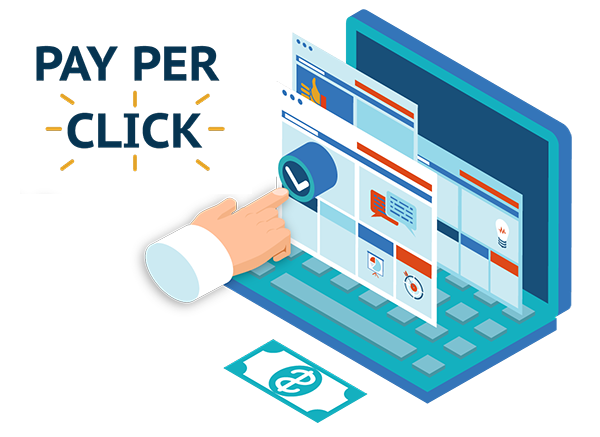
PPC involves paying for ads that appear at the top of search engine results pages or on social media platforms. Businesses pay for each click their ads receive, and the cost per click (CPC) can vary depending on the competitiveness of the industry and the keywords targeted.
Pay Per Click Marketing : Digital marketing in Kenya
In Kenya, Google Ads and Facebook Ads are the most popular PPC platforms used by businesses. Both platforms allow businesses to target specific audiences based on demographics, interests, and location.
Social Media Marketing
Social media marketing involves using social media platforms such as Facebook, Instagram, Twitter, and LinkedIn to promote a brand, product or service. It is a cost-effective way to reach a wider audience, engage with customers, and build brand awareness.
In Kenya, social media marketing is popular among businesses of all sizes, especially those targeting millennials and Generation Z. Social media platforms such as Instagram and TikTok are particularly popular among younger audiences.
Email Marketing
Email marketing involves sending promotional emails to a list of subscribers. It is an effective way to nurture leads, build relationships with customers, and drive sales.
In Kenya, email marketing is widely used by businesses in the e-commerce industry, as well as those in the B2B sector. Businesses can use email marketing to send newsletters, product updates, promotional offers, and more.
Content Marketing
Content marketing involves creating valuable and relevant content to attract and engage a target audience. It includes blog posts, infographics, videos, podcasts, and more. The aim of content marketing is to establish a brand as a thought leader in its industry, build brand awareness, and attract potential customers.
In Kenya, content marketing is gaining popularity among businesses of all sizes. Businesses can leverage content marketing to educate their audience, answer common questions, and provide valuable insights into their industry.
Best Practices for Digital Marketing in Kenya
To achieve success in digital marketing in Kenya, businesses need to follow best practices that ensure they get the most out of their marketing efforts. Here are some best practices for digital marketing in Kenya:
Understand Your Target Audience
Before embarking on any digital marketing campaign, businesses need to understand their target audience. They need to know their demographics, interests, pain points, and behaviors. This information helps businesses create targeted campaigns that resonate with their audience and drive results.
Set Measurable Goals
Businesses should set measurable goals for their digital marketing campaigns. These goals should be specific, measurable, achievable, relevant, and time-bound (SMART). Measurable goals help businesses track their progress and determine the effectiveness of their marketing efforts.
Create Compelling Content
Compelling content is essential for digital marketing in Kenya. Businesses should create content that educates, entertains, or solves a problem for their target audience. Content should be optimized for search engines, visually appealing, and shareable on social media platforms.
Leverage Social Media Influencers
Social media influencers are individuals with a large following on social media platforms. Businesses can partner with social media influencers to promote their products or services to their followers. Influencer marketing is a cost-effective way to reach a wider audience and build brand awareness.
Analyze and Optimize Campaigns
Businesses should analyze their digital marketing campaigns regularly and optimize them for better results. They should track metrics such as website traffic, conversion rates, social media engagement, and email open rates. Based on this data, businesses can make informed decisions and adjust their campaigns to achieve better results.
Challenges of Digital Marketing in Kenya
While digital marketing offers numerous benefits for businesses in Kenya, there are also several challenges they need to overcome. These challenges include:
Lack of Reliable Data
One of the main challenges of digital marketing in Kenya is the lack of reliable data. Data is essential for making informed decisions and optimizing campaigns. However, data collection and analysis are still in their early stages in Kenya, which makes it challenging for businesses to get accurate insights into their target audience.
Limited Internet Penetration
Although internet penetration is growing in Kenya, it is still limited compared to developed countries. This makes it challenging for businesses to reach a wider audience, especially in rural areas where internet access is limited.
Language Barriers
Kenya is a multicultural and multilingual country, with over 40 different languages spoken. This presents a challenge for businesses trying to reach a diverse audience. They need to create content in multiple languages and tailor their campaigns to suit different cultural norms and preferences.
Conclusion
Digital marketing in Kenya offers numerous benefits for businesses, including increased brand awareness, customer engagement, and revenue growth. To achieve success in digital marketing, businesses need to understand their target audience, set measurable goals, create compelling content, leverage social media influencers, and analyze and optimize their campaigns regularly. While there are challenges such as limited internet penetration and language barriers, businesses can overcome these challenges by adopting best practices and leveraging local expertise. With the right approach, digital marketing can help businesses in Kenya achieve their marketing goals and drive growth in their respective industries.


Recent Comments